I bought this pen at the Hagia Sophia Museum. It is a carefully conceived calligraphic instrument shaped by history, geometry, and cultural continuity, where writing becomes an act of remembrance rather than mere inscription.
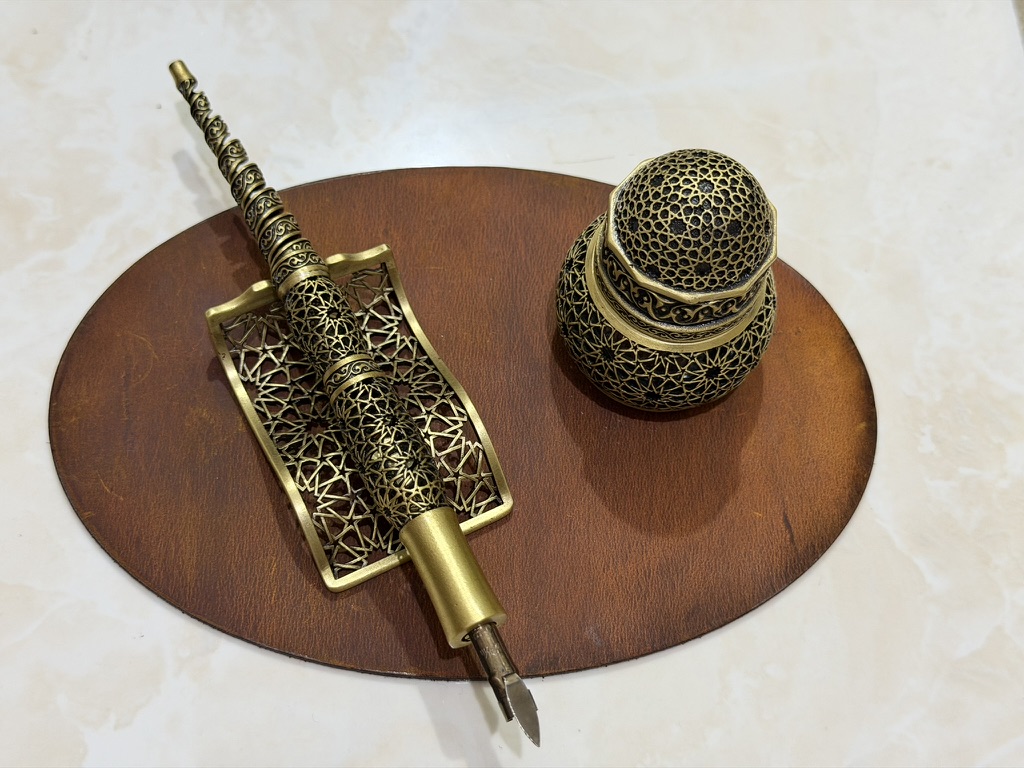
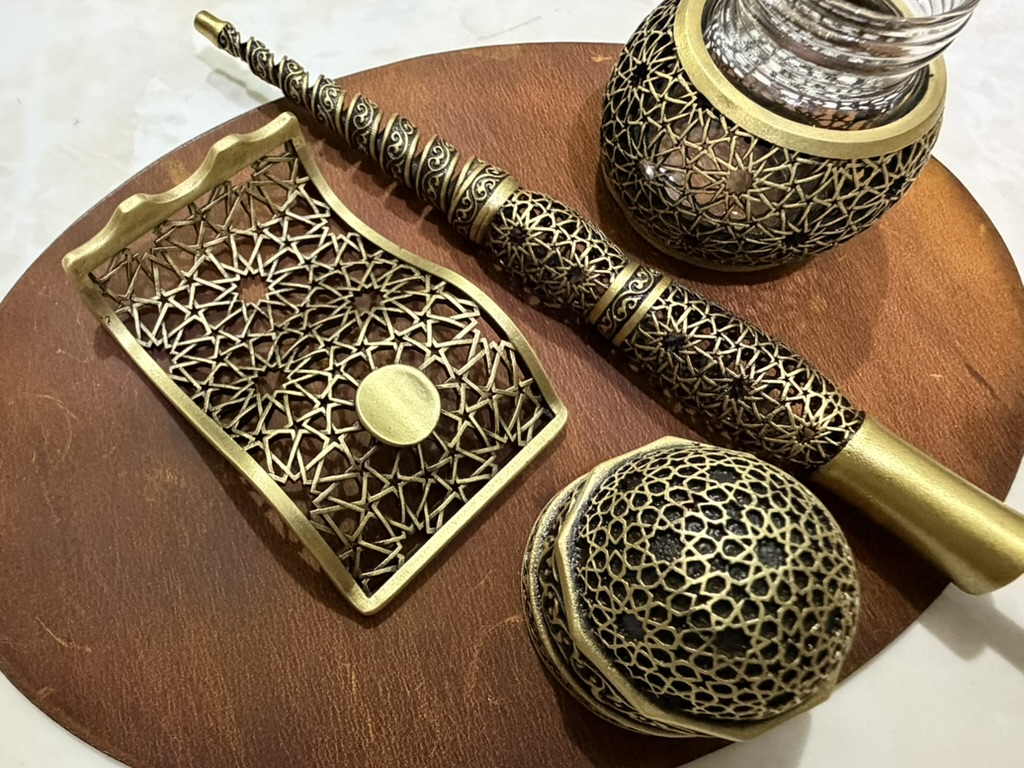
Crafted in solid brass and finished with a restrained antique patina, the pen draws its visual language from Seljuk and classical Islamic geometric traditions, the same intellectual grammar that once governed architecture, manuscript illumination, and ornamental theology. Its surface is wrapped in interlacing star patterns that suggest infinity without repetition, a visual metaphor for order beyond measure. These are not decorative gestures for their own sake; they echo a worldview in which geometry served as both mathematics and metaphysics.
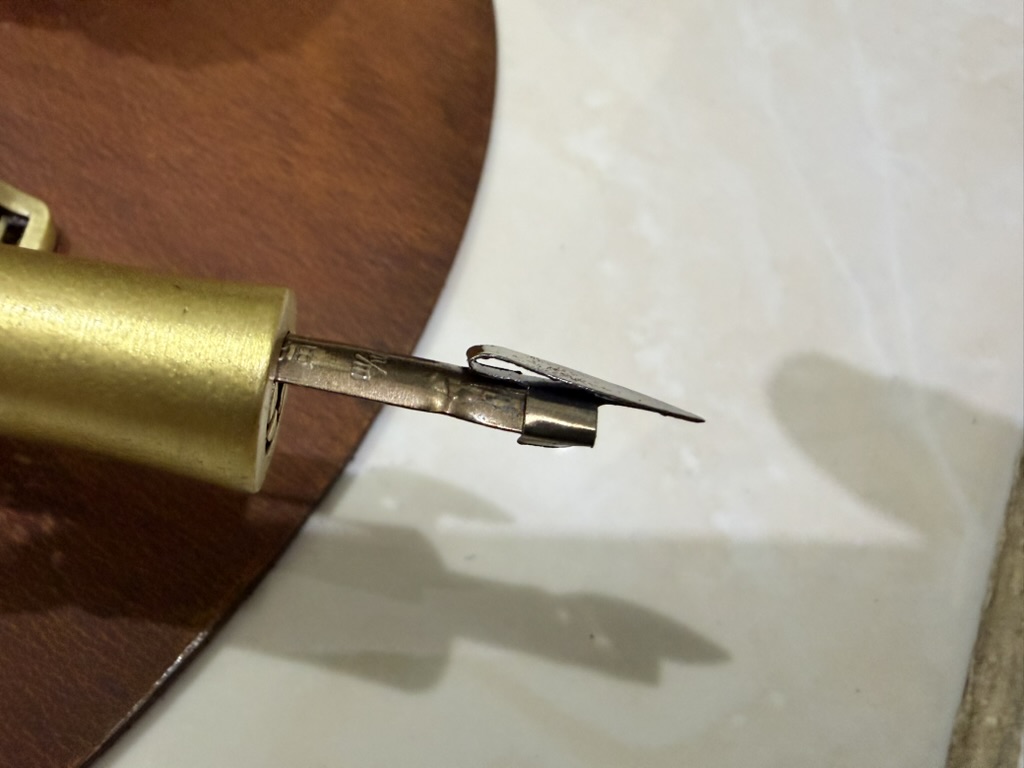
As a dip pen, the instrument deliberately resists modern convenience. It demands pause, intention, and rhythm. Each line must be earned through motion and pressure, recalling a time when writing was inseparable from discipline and contemplation. The steel nib, simple and honest, allows expressive variation rather than mechanical consistency, placing responsibility back into the hand of the writer. This pen does not hurry; it invites patience.
The accompanying ink bottle and pen rest complete the set as a unified object of the desk. Their open latticework mirrors the pen’s geometry, while their weight and presence anchor the act of writing in physical space. Functionally sound, they are equally objects of quiet authority—tools that belong in a study, a library, or beside a manuscript, not hidden away in a drawer.
That this piece was purchased at Hagia Sophia is especially fitting. Few places embody continuity of civilisation as fully: Roman structure, Byzantine theology, Islamic scholarship, and modern memory coexist within its walls. This pen reflects that layered inheritance. It does not imitate any single era, but rather channels the enduring intellectual tradition that valued knowledge, beauty, and restraint in equal measure. The pen reminds me that writing was once a sacred craft, where ink carried weight, words carried responsibility, and form mattered as much as content. It is an object that does not merely write history, but quietly belongs to it.